

Home / Resources
Resources
Gentle tools for little hearts and the grown-ups beside them.
Guidance for parents, caregivers, teachers and faith communities, plus free activities you can do together today.

For parents & caregivers
Walking beside a grieving child
Grief is a natural response to loss. Because children may not have the words to explain their feelings, it can show up as sadness, worry, anger, quietness, clinginess, tiredness, stomach aches, trouble focusing or changes in behaviour.
The goal is not to rush a child through their feelings, but to walk with them gently, offering comfort, reassurance and a safe space.

Starting the conversation
- Choose a calm, unhurried moment. Sitting side by side, drawing or walking can feel easier than face to face.
- Use simple, honest words suited to the child’s age.
- Let the child lead. Short conversations, repeated over days, are normal.
- Questions may come back again and again. That is how children make sense of things.
Helping children calm their bodies
- Breathe together with the book’s heart: in for 4, hold for 2, out for 4, hold for 2.
- Use comforting imagery: a warm light, a soft breeze, safe hands.
- Move: music, dancing, stretching, a walk outdoors.
- Keep familiar routines for meals, school and bedtime.
Things that help to say
- “It’s okay to feel sad. Your feelings matter.”
- “I’m here. You can tell me anything, whenever you’re ready.”
- “It wasn’t your fault.”
- “We can remember them together.”
- “It’s okay to laugh and play too.”
Things to avoid
- “Be strong” or “Don’t cry.” Tears are a healthy release.
- Phrases like “went to sleep” or “we lost them,” which can confuse or frighten young children.
- “At least…” comparisons that make a loss seem smaller.
- Rushing a child to feel better or to “move on.”
After family change
Separation, divorce, migration or a move can bring real grief, even when no one has died. Name the change honestly, keep routines where you can, and reassure the child that the adults’ decisions are not their fault. Days 1 and 3 of the journey are a gentle place to start.
Using the Feelings Thermometer
At the start of each day, invite the child to point to how they feel: Happy, Calm, Sad, Frustrated or Angry. Name the feeling back to them without trying to fix it, and ask where they feel it in their body. Try it below.
When should I be concerned? If a child’s grief is seriously affecting daily life, such as difficulty getting out of bed, deep sadness, missing school, no longer enjoying favourite activities or withdrawing from loved ones, please seek support from a paediatrician, school counsellor or child psychologist. See helplines and guidance.
For teachers & guidance counsellors
Bringing October Night Lights into school
Use the journey with one child, a small group or a whole class, over seven consecutive weekdays of 30–45 minutes.
Classroom implementation
- Read the Guiding Light section first.
- Tell parents and caregivers before you begin.
- Keep the same time and place each day.
- Follow the five-step rhythm: settle, check in, story, create, comfort.
Small-group facilitation
- Groups of 4–8 children work well.
- Agree simple group promises: listen, be kind, it’s okay to pass.
- Children’s drawings and words belong to them; share only with permission.
After community loss
- After a disaster or a death in the school community, begin with Day 1 and Day 2.
- Expect strong feelings in waves over weeks.
- Coordinate with guidance staff and families.
Emotional check-ins
- Use the Feelings Thermometer at the start of the day.
- Notice patterns over several days, not single moments.
- Follow up privately and gently.
Recognising behaviour changes
- Withdrawal, irritability or anger
- Trouble concentrating, falling grades
- Stomach aches, headaches, tiredness
- Clinginess or worry about separation
Referral considerations
- Concerns that last or grow over several weeks
- Any talk of wanting to die or be with the person who died
- Any safeguarding concern: follow your school’s child-protection procedure
Activities for children
Try these together
Free activities from the book, best done beside a grown-up. Nothing a child chooses here is saved or sent.
Let’s Breathe Together
Follow the heart around the circle: breathe in for 4, hold for 2, breathe out for 4, hold for 2. Three rounds.
How Do You Feel?
Pick the face that matches your feeling, show where you feel it, and choose what helps you feel better.

Feelings Thermometer: Today, I am feeling…
Tap a feeling. It is not saved anywhere.
Faith-based resources
Comfort through prayer and scripture
October Night Lights is a faith-based programme. The included scriptures remind children that they are not alone in their grief and that love continues beyond loss.
Guided prayer for child and caregiver. Find a quiet spot. As you breathe in, whisper: “God is with me.” As you breathe out, whisper: “I am not alone.” Do this three times.
Scriptures in the book: Psalm 56:3 · 1 Peter 5:7 · Psalm 34:18 · Revelation 21:4 · Nehemiah 8:10 · Philippians 4:13 · Jeremiah 29:11
For children’s ministries: the seven days fit a week of Vacation Bible School, a Sunday-school series or pastoral visits after a bereavement.

Downloads
Free printables
Print at home or school on A4 or US Letter paper.

Let’s Breathe Together
The breathing heart with the 4-2-4-2 rhythm, to keep by the bed or desk.

My Feelings Check-In
The Feelings Thermometer, nine feeling faces, “Where do I feel it?” and “What helps me?”
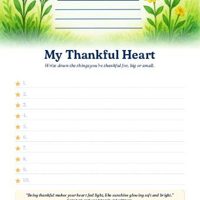
My Thankful Heart
A gratitude list to fill in, come back to and add to.

Memory Garden Stones
Stones to decorate with kind words or pictures of someone or something you miss.

Shining Star Award
The certificate from the book, ready to fill in by hand.
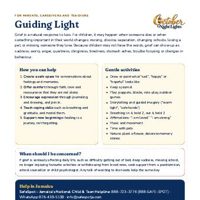
Guiding Light: A Guide for Grown-Ups
How children show grief, gentle activities, and when to seek more help.
Videos
Read-alongs and guided breathing, coming soon
We are recording short videos: Anna-Kay reading from the book, a guided breathing practice for children, and a welcome for facilitators. Leave your email and we’ll tell you when they’re ready.